The Surprising Weight of an Aquarium
If you've ever tried to move a full fish tank, you already know one of the best-kept secrets in fishkeeping... water is heavy. Really heavy.
New aquarists are often caught off guard when they fill their brand-new tank and realise it suddenly weighs as much as a small elephant. It's not just the water, either. Add glass, gravel, decorations, and the stand itself, and your "simple" aquarium quickly becomes one of the heaviest objects in your home.
Let's break down why aquariums weigh so much, how to calculate the total load, and what you need to consider before you pick the perfect spot for your watery masterpiece.
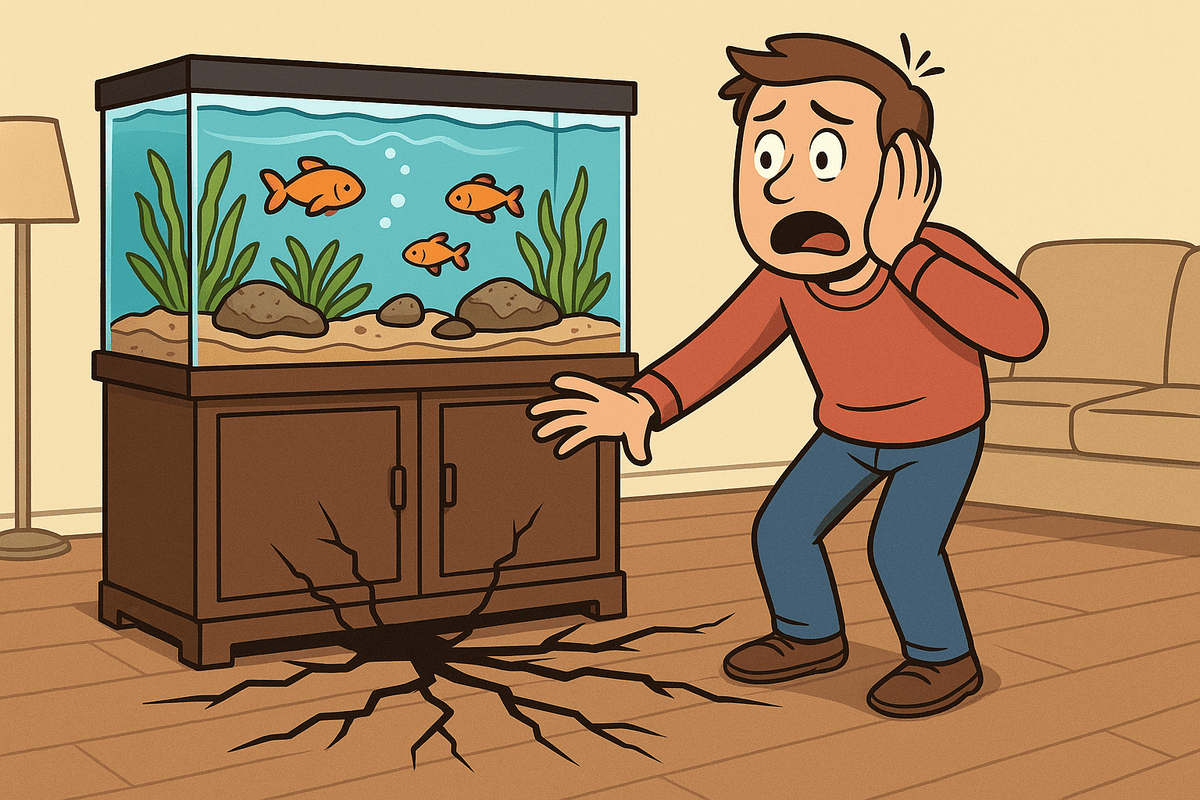
Water: The Real Heavyweight
The main culprit is, of course, water itself.
"A gallon is only 8.34 lb — how bad can it be?" Well, multiply that by 10, 40, or 100 and the numbers add up quickly. Here's a handy reference for common sizes (just the water weight):
| Tank size (U.S. gallons) | Water weight (lb) | Water weight (kg) |
|---|---|---|
| 5 gal (≈ 19 L) | 42 lb | 19 kg |
| 10 gal (≈ 38 L) | 83 lb | 38 kg |
| 20 gal (≈ 76 L) | 167 lb | 76 kg |
| 40 gal (≈ 151 L) | 334 lb | 151 kg |
| 55 gal (≈ 208 L) | 459 lb | 208 kg |
| 75 gal (≈ 284 L) | 626 lb | 284 kg |
| 100 gal (≈ 379 L) | 834 lb | 379 kg |
Even a 10-gallon beginner tank weighs more than many people expect — about the same as a large bag of dog food. And once you move past 40 gallons, you're talking about hundreds of pounds of water before adding a single rock or decoration.
Don't Forget the Extras
Water is only part of the story. A complete setup includes:
- Glass/acrylic tank: ~9–26 lb for small tanks; 55–75 lb for ~200 L / 55 gal.
- Stand/cabinet: 35–65 lb+ depending on build.
- Substrate: 1–1½ pounds per gallon — a 55-gallon tank usually takes 45–65 pounds of gravel or sand.
- Hardscape: stone and wood can easily add 20–45 lb.
- Gear & lids: a few extra pounds altogether.
Put together, a typical 55 gal aquarium can exceed 600 lb. Even a "small" 10 gal setup often lands around 90–110 lb once everything is in.
Why Weight Matters
Now, you might be wondering: "So what if it's heavy? It just sits there, right?"
Well... yes and no.
That weight isn't spread evenly — it's concentrated over the footprint of the tank. A 20-gallon aquarium that's about 30 inches long and 12 inches wide covers just 2.5 square feet. At roughly 200 pounds total, that's more than 80 pounds per square foot pressing down on your floor.
That's not a problem for solid floors or concrete slabs, but if your home has wooden joists, suspended floors, or is upstairs, things get trickier.
A few points to keep in mind:
- Floor strength: Most modern homes can handle it, but placing a large tank perpendicular to floor joists (so the weight spreads across multiple supports) is safer.
- Stand stability: Cheap or uneven stands can warp under long-term pressure, causing stress on the glass seams. Always level your tank before filling.
- Moving it later: Once filled, even a 15-gallon tank is awkward to move. Empty it before you try, or you risk cracking the glass.
The "It Looked Smaller in the Shop" Effect
A curious thing happens when you first see an aquarium in the store. Empty, it seems manageable. "I can lift that myself," you think. "It'll fit nicely on that sideboard."
Then you get it home, fill it with water, and suddenly it's a two-person lift just to slide it an inch. Everything about an aquarium becomes more serious once the water goes in.
Even small desktop tanks can surprise you:
- A 3-gallon nano tank (common for shrimp) weighs over 20 pounds once set up.
- A 7-gallon beginner tank — about the size of a small suitcase — comes in around 75–90 pounds.
- A 15-gallon community tank easily passes the 150-pound mark.
In other words, even "small" tanks are not lightweight decorations. They're furniture.
How to Plan for the Weight
If you're setting up a new tank, it's smart to plan where it will live before you fill it.
Here are a few quick guidelines:
1. Choose a sturdy surface
Aquarium stands are designed to distribute weight evenly across their footprint. Regular furniture, especially with legs or uneven panels, may not handle the load over time. Avoid particleboard unless it's specifically reinforced.
2. Check the floor type
Ground floors with concrete foundations are safest. For upper floors, position the tank along a load-bearing wall and perpendicular to joists. If in doubt, spread the weight using a piece of thick plywood under the stand.
3. Don't rely on wheels
Rolling stands or trolleys sound convenient but are a recipe for disaster. Once full, tanks should never be moved, as the water's sloshing force can easily twist or crack the glass.
4. Leave room for maintenance
It's tempting to tuck your tank into a perfect little corner, but make sure you can still reach the back for cables, filters, and cleaning. You don't want to move 600 pounds of aquarium just to plug in a new heater one day.
Thinking Big? Think Floor Load
If you're dreaming of a 100-gallon showpiece, congratulations — but do a little math first.
A fully stocked 100-gallon setup can easily top 900 to 1,100 pounds — roughly the same as five full-grown adults standing shoulder to shoulder. That's a lot of stress for a floor built for people and furniture, not indoor ponds.
Some aquarists even consult structural engineers for very large setups, especially in apartments. While that might sound extreme, it's cheaper than repairing a cracked ceiling below!
A Fun Thought Experiment
Here's a simple way to picture the weight of water:
- Each gallon weighs about as much as a bowling ball — around 8 pounds.
- A 15-gallon tank? Picture 15 bowling balls sitting on your stand.
- A 55-gallon tank? That's like having an entire gym rack of bowling balls lined up in your living room.
Final Thoughts: Respect the Weight, Enjoy the Reward
While it might sound daunting, the weight of your tank isn't a reason to worry — it's just something to respect. Once safely in place, an aquarium becomes a stable, peaceful centrepiece that can last for years.
The key is to plan ahead: choose a solid stand, pick the right spot, and understand that water's weight is both its beauty and its burden. After all, you're not just filling a glass box — you're creating a miniature world. And like any world, it needs a strong foundation.
So next time you pour in that first bucket, pause for a moment and appreciate the sheer physical presence of your tank. It's a quiet reminder that the most tranquil parts of our homes can also be the heaviest.

Peter Lane
Here to share the lessons I've learned, the money and time-saving tips, and the little tricks that have made a big difference in fostering a thriving aquatic environment.